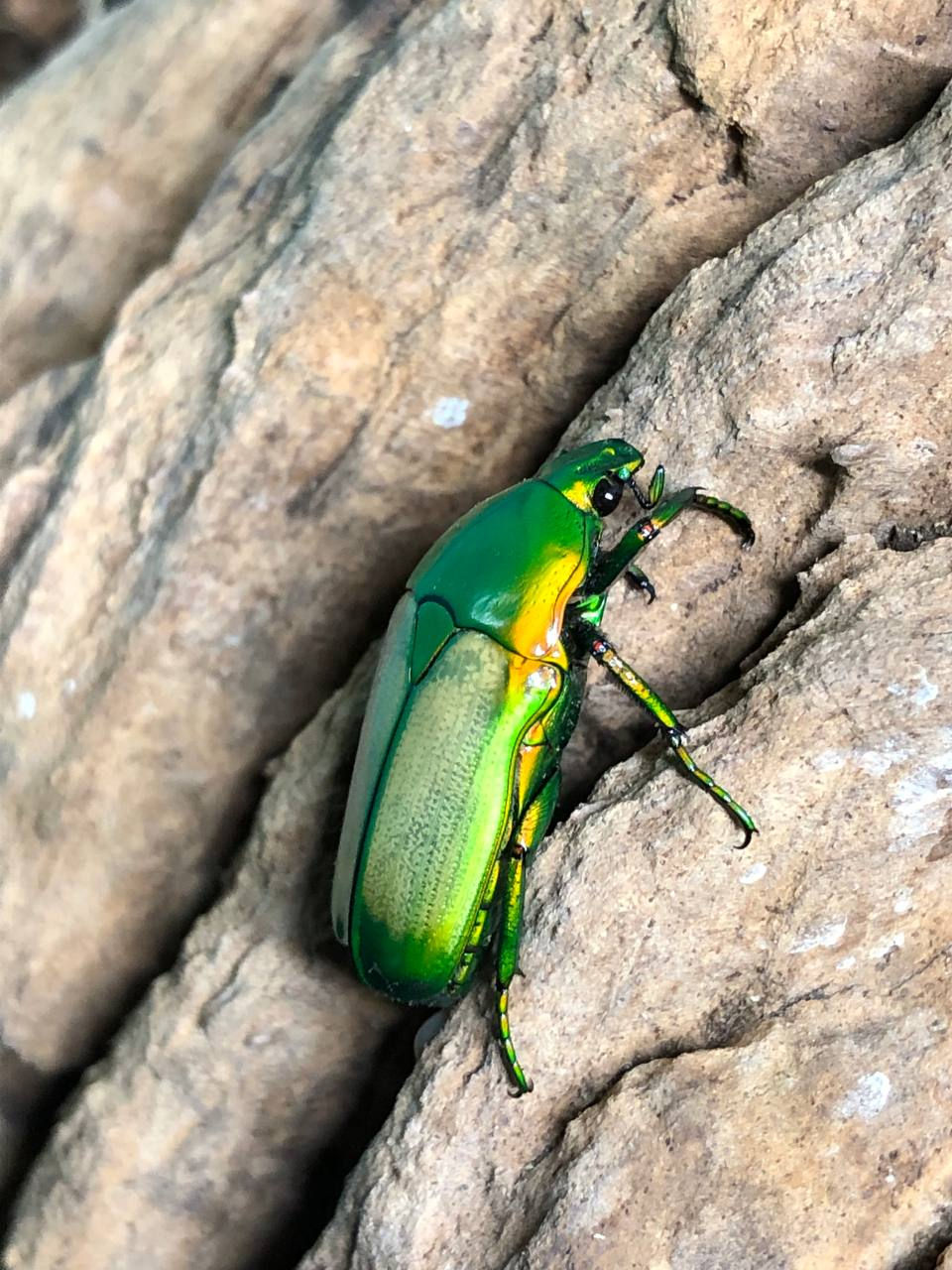
Sun Beetles For Sale UK | Pachnoda marginata peregrina
Not currently breeding - Care info only!
Looking for a spectacular, high-energy addition to your collection? The Sun Beetle (Pachnoda marginata) is a classic West African species, prized for its smooth, golden-yellow elytra adorned with bold, deep-chocolate to maroon patterns.
Often referred to as the quintessential sun beetle, these captivating cetoniids are famous for being highly active during daylight hours, providing a dynamic and colourful display that nocturnal invertebrates simply cannot match. From their frantic buzzing flights to their mad scramble for overripe fruit, they are the undisputed entertainers of the beetle world.
🔍 At A Glance: Sun Beetle Husbandry Summary
Scientific Name: Pachnoda marginata peregrina
Common Names: Sun Beetle | Sun Scarab
Adult Size & Lifespan: 2.5–3cm | 6–10 months (Larval stage 2–5 months)
Life Cycle: Complete metamorphosis; requires deep, nutrient-rich substrate for successful pupation.
Ideal Climate: Temperature: 20–28°C (25°C preferred) | Humidity: 50–80% (Keep substrate slightly drier than tropical stick insect setups).
Physical Identification: Vibrant mustard-yellow to orange elytra with striking, solid dark chocolate/maroon symmetrical markings.
Enclosure Sizing Guide: Requires significant vertical volume (min 30x30x40cm) to accommodate energetic flight behaviour.
Dietary Base: Larvae: Decaying organic matter, hardwood leaf litter, rotten hardwood. Adults: Fresh fruit/vegetables, leafy greens, protein supplements (beetle jelly, fish flakes).
Behavioural Traits: Diurnal (active during the day), heliophilic (sun-loving), and known for being active "entertainers" of the beetle world.
At EntoScapes, our Sun Beetles are UK captive-bred and raised on our nutrient-rich leaf litter and fruit-enriched diets to ensure they arrive healthy, heavy-bodied, and ready for a long life. We have often observed our beetles having a more radiant and rich colour than other suppliers due to the varied high quality bee pollen we also provide to them.
Explore the sections below for our biology-led guide on their African savannah origins, their sun-loving biology, and why these bold scarabs are the perfect centerpiece for our high-clarity vertical habitats.