


Yellow-Spotted Fruit Beetles For Sale UK (Pachnoda fissipunctum) - Captive Bred
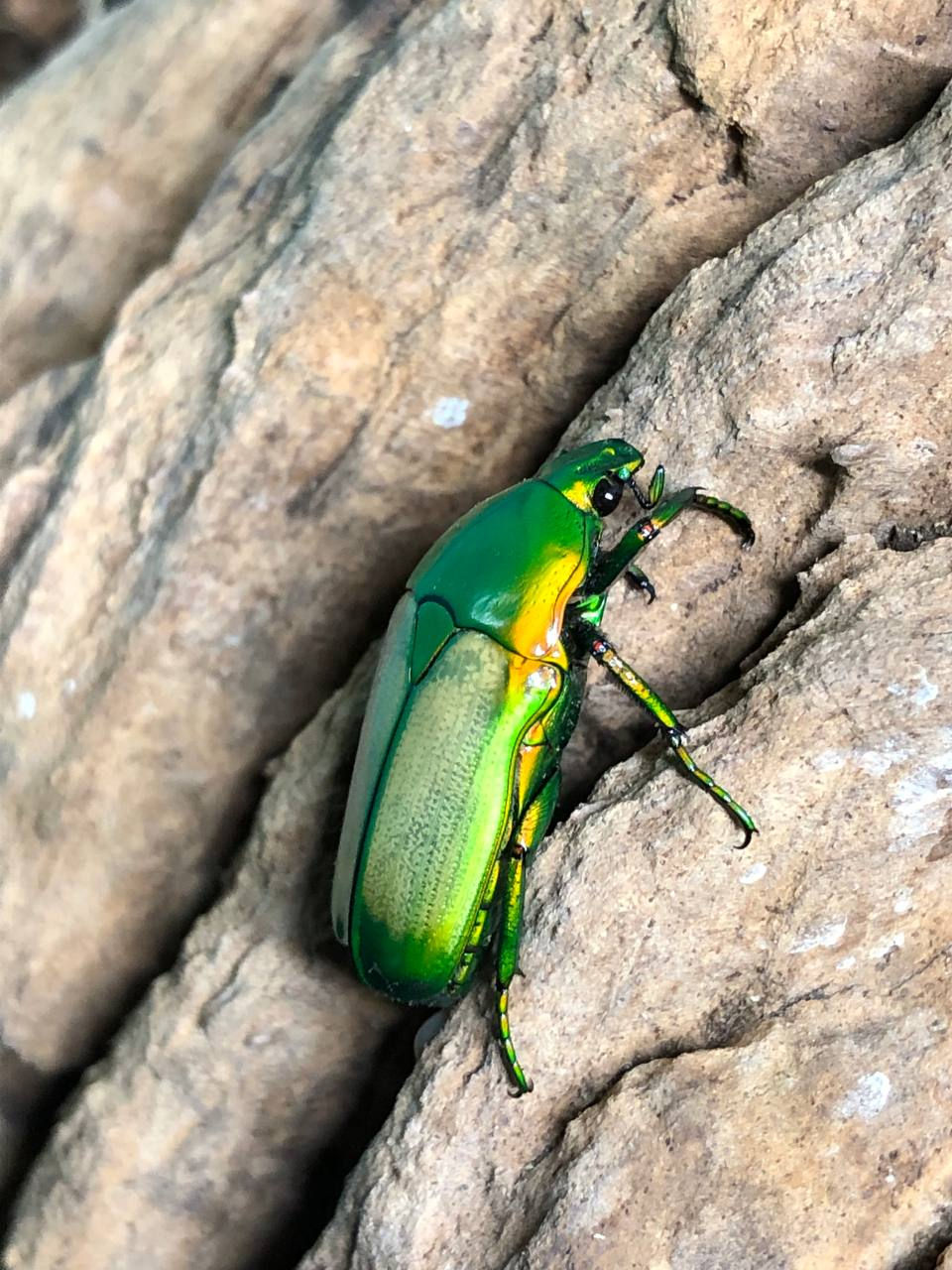
Looking for a burst of colour for your terrarium? Pachnoda fissipunctum, the Yellow-Spotted Fruit Beetle, is a spectacular East African species prized for its velvety dark-charcoal elytra adorned with bold, circular yellow-to-orange spots.
Often referred to as "Sun Beetles", these captivating cetoniids are famous for being highly active during daylight hours, providing a dynamic and colourful display that nocturnal invertebrates simply cannot match. From their incredible "buzzing" flights to their frantic scramble for overripe fruit, they are the undisputed entertainers of the beetle world.
🔍 At A Glance: Pachnoda fissipunctum Husbandry Summary
Scientific Name: Pachnoda fissipunctum - Common Names: Yellow-Spotted Fruit Beetle | Sun Beetles
Adult Size & Lifespan: 2.5–3cm (Larvae grow up to 4cm) | Adults live 6–10 months (with a 2–5 month larval stage)
Ideal Climate: Temperature: 20–28°C (25°C is optimal; kept between 22–25°C The EntoScapes Way) | Humidity: 50–70% (60–70% maintained using fortnightly misting cycles)
Physical Identification & Behaviour: Striking velvety dark-charcoal elytra decorated with bold, circular yellow-to-orange markings that can resemble a skull pattern across the thorax. Adults are highly active, heliophilic (sun-loving) diurnal flyers that thrive under a 12-hour light cycle. Both sexes are monomorphic, though males display a distinct vertical indentation line down the centre of the abdomen.
Place of Origin: East Africa (specifically native to Ethiopia, with related Cetoniinae species found throughout West and Central Africa inhabiting acacia trees).
Enclosure Sizing & Substrate Depth: A well-ventilated glass or plastic enclosure measuring at least 40x30x30cm is recommended. Requires a deep substrate depth of 10–15cm (allocating roughly 1 litre of substrate per grub) to accommodate burrowing larvae and egg-laying adults.
Dietary Base: Larvae consume high-quality organic material, relying heavily on premium flake soil, rotting hardwood, and hardwood leaf litter (oak, beech, hazel). Adults are enthusiastic generalist frugivores feeding on fresh fruit and vegetables, with cucumber, melon, banana, pear, and strawberries being firm favourites.
Supplemental Nutrition: Supplement weekly with dedicated protein sources (such as shrimp pellets, nutritional yeast, bee pollen, fish flakes, or dried mealworms) along with optional beetle jelly supplements. Serve adult food elevated off the ground to prevent burrowing larvae from pulling it beneath the soil.
Bioactive Co-Habitation: Highly compatible with dwarf white isopods and springtails, which act as a vital clean-up crew to process the heavy organic waste and prevent mould outbreaks within the substrate.
At EntoScapes, our Pachnoda are UK captive-bred and raised on our nutrient-dense flake soil to ensure they arrive as robust, long-lived adults with a strong start to their reproductive life.
Explore the sections below for our biology-led guide on their Ethiopian origins, their grub-to-beetle metamorphosis, and why these sun-loving giants are the perfect centrepiece for a bright, well-ventilated display habitat.




+-+Captive+Bred)